 By
Water leakage in a concrete structure can begin with a small crack, a poorly sealed joint or a breakdown in the waterproofing layer. Although the visible signs may look similar, the right repair method depends on where water enters and what is causing the problem. Two commonly used approaches are crack injection and surface coating. Understanding how they differ helps building owners and contractors choose a suitable waterproofing solution.
What Is Crack Injection in Waterproofing?
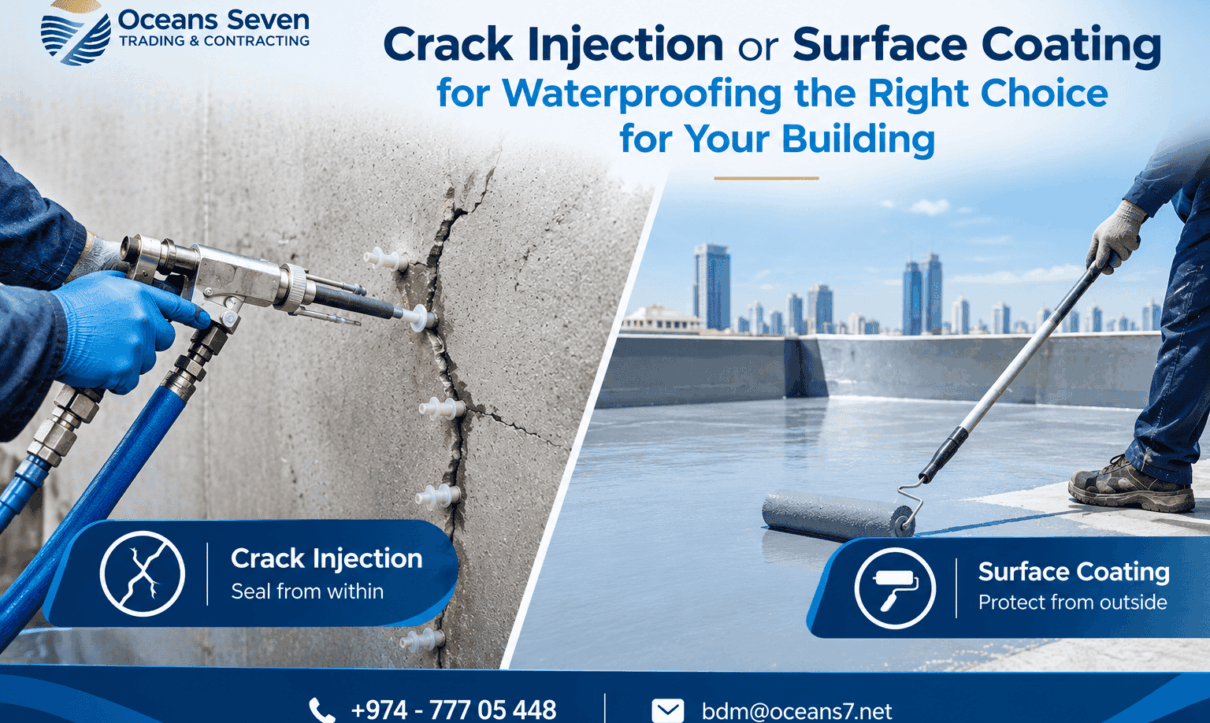
Crack injection is a repair technique used to treat selected cracks within concrete structures. Instead of applying a protective layer only to the outside, the method introduces a suitable grout into the crack to address the water passage within the concrete.
The process generally involves assessing the crack, preparing the affected area, installing injection nozzles and injecting grout under controlled pressure. The material is introduced until the intended section of the crack is filled, following the requirements of the selected product and site conditions.
At Oceans Seven, crack injection using crystalline grout is available for suitable concrete applications. Greenseal Injection Grout is used as part of this service to treat cracks and other specified defects in concrete.
This method can be particularly relevant when water seeps through cracks in basement walls, retaining structures, water tanks or other concrete elements. However, the crack must be assessed first, as active movement, structural damage and the source of leakage can influence the repair approach.
How Does Surface Coating Prevent Water Leakage?
Surface coating works by creating a protective waterproofing layer over a prepared substrate. Depending on the system selected, the coating can help prevent water from passing through the treated surface.
This approach is commonly used for concrete roofs, bathrooms, kitchens, swimming pools and other areas that require protection against water ingress. The coating material must be suitable for the application and compatible with the underlying surface.
For example, Oceans Seven uses a flexible acrylic cementitious coating system for wet areas such as bathrooms and kitchens. For concrete roofs, the company’s specified system includes crack filling, primer and polyurethane waterproof coating, with reinforcement mesh where site conditions require it.
Surface preparation is essential. Dust, loose material, unsuitable existing coatings and untreated cracks can affect adhesion and overall performance. Drainage, corners, joints and pipe penetrations must also receive appropriate attention.
Crack Injection vs Surface Coating
The main difference lies in how each method addresses water entry.
Crack injection focuses on filling and treating suitable cracks within concrete. It is considered when leakage follows a crack or a specific defect that can be accessed and treated through injection.
Surface coating creates a protective layer across the treated area. It is useful when a roof, wet area or other surface requires a continuous waterproofing system.
Neither method is automatically better than the other. A coating may not resolve leakage travelling through a deep crack, while injection alone may not provide the broad surface protection required for an entire roof or wet area.
In some projects, both methods may be necessary. A suitable crack repair may be completed first, followed by a compatible waterproof coating where the overall system requires it. The final approach should be based on the condition of the structure and the manufacturer’s application requirements.
Which Waterproofing Method Is Suitable for Buildings in Qatar?
Buildings in Qatar face environmental conditions that make appropriate waterproofing selection important. High temperatures, intense sunlight, temperature related movement and seasonal rainfall can place demands on exposed building surfaces and joints.
For example, a leaking basement wall may require investigation of cracks and possible water pressure behind the structure. A roof showing widespread leakage may need an assessment of its existing waterproofing layer, drainage outlets, joints and surface condition.
Choosing a repair method based only on the visible damp patch can lead to recurring problems. The underlying cause should be identified before materials are selected or application begins.
Why Professional Assessment Matters
Effective waterproofing starts with understanding the problem rather than choosing a product immediately. The width and depth of a crack, whether it is moving, the direction of water entry and the condition of the surrounding concrete all influence the repair decision.
Oceans Seven provides waterproofing services for basements, water tanks, swimming pools, wet areas, concrete roofs and metallic sheet roofs, alongside crack injection using crystalline grout. Selecting the appropriate treatment for each application helps address the actual source of leakage rather than simply covering its visible signs.
If your building has recurring dampness, visible concrete cracks or unexplained water seepage, contact Oceans Seven to discuss a suitable waterproofing assessment and repair approach for your property in Qatar.