 By
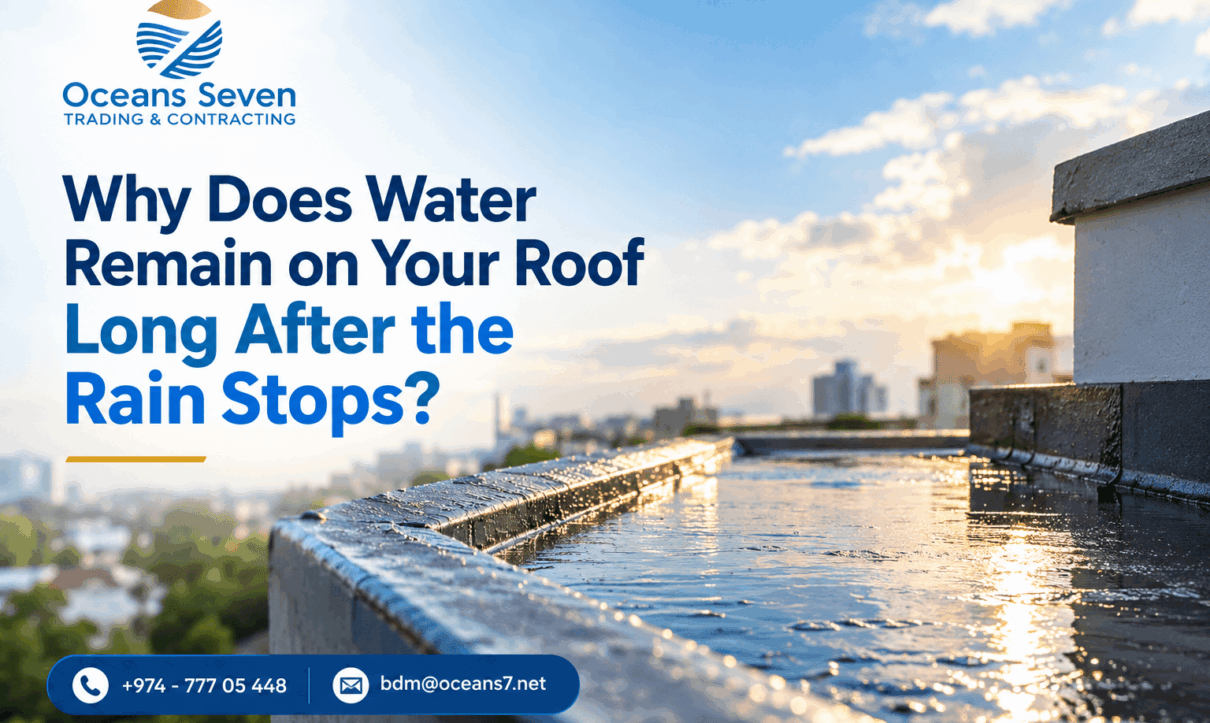
The rain has stopped, but your rooftop still holds pools of water. While some moisture is normal after heavy rainfall, puddles that remain for hours or repeatedly appear in the same spots may indicate a problem with your roof’s drainage or surface.
Ignoring persistent water accumulation can lead to waterproofing damage, indoor dampness and expensive repairs. Understanding why water stays on your roof is the first step towards finding the right solution.
1. Incorrect Roof Slope
Flat roofs are not meant to be perfectly level. They need a slight slope to direct rainwater towards drainage outlets. If the slope is inadequate or uneven, water can collect in low areas instead of flowing away.
If the same spots remain wet after every rainfall, the roof surface may need professional assessment.
2. Blocked Drainage Outlets
Leaves, dust, sand and other debris can block roof drains, preventing rainwater from escaping efficiently. This is particularly common after storms and strong winds.
Regular drain inspections and the safe removal of debris can help maintain proper water flow. If pooling continues despite clear drains, the drainage design may need attention.
3. Depressions in the Roof Surface
Over time, wear, previous repairs or changes in surface levels can create shallow depressions where water collects. Applying a new waterproofing coating without correcting the underlying issue may not prevent the puddles from returning.
A professional assessment can determine whether the surface needs levelling or other corrective work.
4. Damaged Waterproofing
Cracks, peeling coatings and poorly sealed joints can weaken a roof’s resistance to water penetration. Persistent pooling around these areas deserves attention, especially if damp patches or ceiling stains appear indoors.
Standing water does not automatically mean waterproofing has failed. However, visible damage or recurring leakage should be investigated promptly.
5. Effects of Extreme Heat
In Qatar, prolonged exposure to intense sunlight and repeated temperature changes can contribute to the deterioration of certain roofing materials. When an existing waterproofing system develops cracks or weak points, accumulated rainwater may increase the risk of leakage.
Selecting materials suitable for the local climate and roof conditions is essential for long term performance.
How Can You Prevent Roof Water Pooling?
A few preventive measures can help reduce recurring problems.
• Keep roof drains and outlets free from debris.
• Check whether water repeatedly collects in the same areas.
• Inspect visible waterproofing damage and signs of indoor dampness.
• Correct drainage or surface level problems before applying a new coating.
• Arrange periodic roof inspections, particularly before periods of heavy rainfall.
Avoid walking on slippery rooftops or attempting repairs in unsafe conditions. Significant pooling or suspected structural damage requires professional attention.
Protect Your Roof Before Small Problems Grow
Effective roof protection depends on more than applying a waterproofing coating. Proper drainage, suitable surface levels, quality application and regular maintenance all contribute to better performance.
At Oceans 7, we provide waterproofing solutions to help protect buildings against water penetration. If your roof retains water long after rainfall, identifying the cause can help you choose the appropriate repair.
Visit Oceans 7 Services or explore our Concrete Roof Waterproofing Services to learn more about protecting your rooftop.