ioce7

administrator

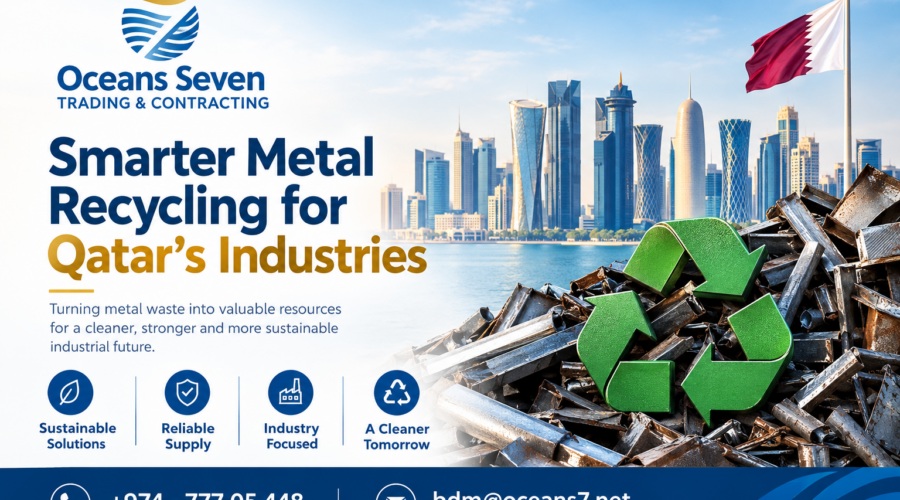
Smarter Metal Recycling for Qatar’s Industries

Smarter Metal Recycling for Qatar’s Industries In construction sites, factories, workshops and large commercial facilities, unused metal and old equipment can accumulate quickly. What may appear to be unwanted material can still hold considerable value when it is properly identified, collected and processed. This is where professional scrap recycling plays an important role. Instead of allowing valuable materials to occupy storage areas or become part of a growing waste pile, businesses can send suitable scrap back into the recycling cycle. Turning Industrial Scrap Into Usable Resources Industrial scrap comes in many forms. Steel sections left after fabrication, copper cables, aluminium components, stainless steel pieces, old machinery and electronic equipment all require different methods of handling. Oceans Seven Trading & Contracting operates a Scrap Division in Qatar that handles both ferrous and non ferrous materials. Its scrap operations include the purchase and processing of materials such as steel, stainless steel, aluminium, copper, brass, bronze and high nickel alloys. The process begins with identifying the material correctly. Different metals have different commercial values and processing requirements, so proper assessment is an important part of responsible scrap handling. More Than Metal Collection A scrap yard is not simply a place where unwanted materials are stored. Effective scrap management involves several stages, from collection and sorting to processing and onward handling. For businesses, this can make a practical difference. Excess materials can take up valuable space, interfere with site organisation and create additional handling requirements. A planned scrap collection service allows companies to move these materials out of their premises while keeping different categories properly managed. Oceans Seven provides scrap recycling services for industrial and commercial requirements across Qatar, including production scrap and commercial cleanouts. The company operates two scrap yards with certified recycling facilities. What Types of Scrap Can Be Handled? Different industries produce different kinds of surplus materials. A professional recycling service needs to be equipped to deal with this variety. The Scrap Division handles materials and equipment including: • Copper• Stainless steel• Aluminium• Steel• Brass and bronze• High nickel alloys• E waste and computers• Machinery• Chillers and AC units• Building materials This makes scrap recycling relevant to a wide range of businesses, including manufacturers, builders, contractors, service centres, distributors, municipalities and other organisations that regularly generate recyclable materials. Why Proper Scrap Sorting Matters Mixing different materials can make recycling and valuation more complicated. Separating materials according to their type and condition helps create a clearer picture of what is being handled. For example, copper, aluminium and stainless steel have different characteristics and market values. Machinery and electronic equipment may also require a different handling process from ordinary metal scrap. Accurate assessment therefore becomes an important part of professional scrap management. It helps businesses understand the materials they are sending for recycling while allowing recyclers to process them according to their category. A Practical Choice for Businesses in Qatar For a construction company completing a project, a manufacturer clearing production scrap or a commercial facility replacing old equipment, accumulated scrap can become a logistical concern. Professional scrap recycling provides a way to manage these materials without allowing them to remain unused on site. Oceans Seven works with businesses across Qatar to collect, assess and process industrial and commercial scrap through its Scrap Division. The value of recycling is not limited to the material itself. Better scrap management can also help businesses make better use of storage areas, organise work sites and handle surplus materials through a defined process. Giving Old Materials Another Purpose Every piece of scrap has a story. A section of steel may have come from a completed construction project. Copper may have been part of an electrical installation. An old machine may have served a production line for years. Once these materials are no longer required, their usefulness does not necessarily end. Through proper collection, sorting and processing, recyclable materials can re enter the industrial supply chain. For businesses in Qatar, professional scrap recycling offers a practical way to manage surplus materials while making better use of resources already in circulation. Oceans Seven Trading & Contracting brings its Scrap Division together with its wider industrial service activities, providing businesses with a dedicated point for scrap purchasing and processing requirements.

READ MORE
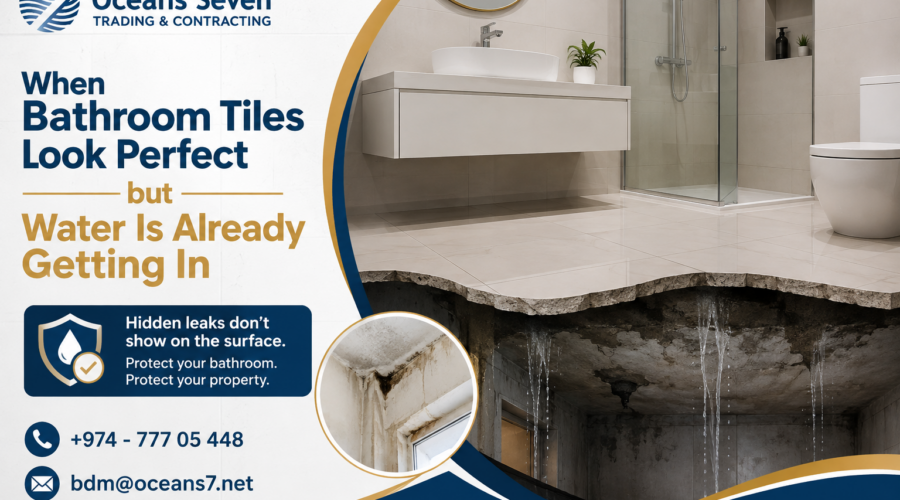
When Bathroom Tiles Look Perfect but Water Is Already Getting In

When Bathroom Tiles Look Perfect but Water Is Already Getting In A bathroom can look completely finished. The tiles are attractive, the grout lines appear clean, and the floor seems to handle everyday water without any problem. Yet moisture can still be finding its way beneath the surface. This is one of the reasons bathroom waterproofing is often misunderstood. Tiles create a durable and water resistant surface, but they are not the complete waterproofing system. Water can enter through grout joints, corners, movement points and areas around pipes and drains. Once moisture reaches the layer beneath the tiles, the problem may continue without being immediately visible. What Happens Beneath the Tiles? Every shower, bath and bathroom wash exposes the surrounding surfaces to water. Some of that water can pass through tiny openings in grout or around joints. If there is no properly installed waterproof barrier underneath, moisture can reach the substrate. The visible signs may appear somewhere else. A damp patch can develop on the wall next to the bathroom. Paint may begin to peel in an adjoining room. A ceiling below may show staining. In some cases, the bathroom itself may continue looking perfectly normal while moisture is slowly affecting the structure beneath it. That is why locating the visible stain is not always the same as identifying the source of the problem. Grout Is Not a Substitute for Waterproofing Grout has an important role in a tiled surface. It fills the spaces between tiles and helps create a finished, stable surface. However, grout should not be treated as the primary waterproofing barrier. Over time, grout can develop fine cracks or gaps. Building movement, regular cleaning, temperature changes and repeated exposure to moisture can also affect joints and sealants. Water can then find small pathways into the layers below. Technical guidance for wet areas places the waterproofing membrane behind or beneath the tiled surface, with particular attention given to joints, corners, drains and pipe penetrations. The Vulnerable Areas Are Often the Smallest Details A bathroom does not leak only because of a large crack. The connection between the floor and wall, the area surrounding a drain, pipe penetrations, shower corners and changes between different surfaces all require careful treatment. These locations can become weak points when waterproofing is incomplete or poorly detailed. Proper surface preparation is also important. The substrate needs to be suitable for the waterproofing system, and the membrane must be applied correctly before the tile installation begins. A waterproofing system is therefore not simply a coating spread across a bathroom floor. It involves preparation, application, detailing and protection of vulnerable areas. Why Wet Areas Require Careful Planning Bathrooms have a completely different moisture environment from bedrooms, living rooms or corridors. Water is deliberately introduced into the space every day. Shower areas receive direct water exposure. Bathroom floors deal with standing water and splashing. Steam adds moisture to surrounding surfaces. Drainage points must remove water efficiently, while joints and penetrations need to remain properly sealed. The waterproofing system needs to work together with the floor slope, drainage arrangement, tile adhesive, grout and sealants. A weakness in one area can eventually affect another. This is particularly important during new construction and major bathroom renovation. Installing the waterproofing system correctly before the final tiles are fixed gives the building a protective layer that cannot be seen once the bathroom is completed. What About an Existing Bathroom? An existing bathroom requires a different approach when seepage has already appeared. Simply replacing a few tiles or applying a new layer of grout may not solve the underlying issue. The visible damage needs to be assessed to determine whether water has reached the substrate or surrounding structure. The right repair depends on the source, extent and location of the moisture. In some cases, localised repairs may be sufficient. In others, the affected area may need to be opened up so that the waterproofing layer can be properly restored. Trying to cover a recurring leak without addressing its source can result in repeated repair work and increasing damage. Protect the Structure Behind the Finish Good bathroom design is not only about choosing attractive tiles. What sits behind those tiles matters just as much. A properly planned waterproofing system helps prevent moisture from reaching the building materials underneath the finished surface. It can also reduce the risk of dampness spreading into adjoining spaces and lower floors. For property owners, this means waterproofing should be considered during the planning stage rather than only after a leak becomes visible. At Oceans7, we understand that waterproofing needs to be approached according to the condition and requirements of each property. From wet areas and bathrooms to larger building protection requirements, the focus should be on identifying vulnerable areas and applying a suitable waterproofing system with proper surface preparation and detailing. A bathroom may hide its waterproofing system completely once the tiles are installed. That does not make it less important. In fact, the layer you cannot see can be the part doing the most important work.

READ MORE

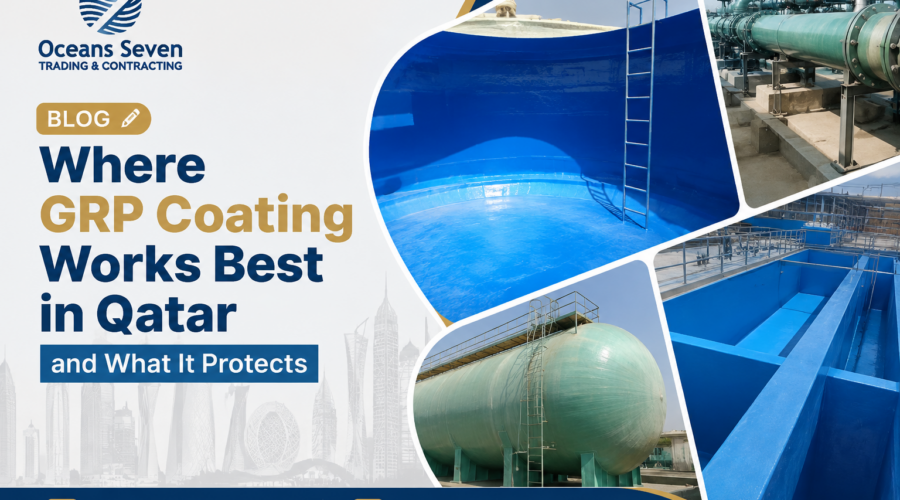
Where GRP Coating Works Best in Qatar and What It Protects

Where GRP Coating Works Best in Qatar and What It Protects Buildings and industrial structures in Qatar are exposed to heat, moisture, water, chemicals and demanding operating conditions. Surfaces that regularly come into contact with water or corrosive substances can gradually deteriorate if they are not properly protected. GRP coating is one option used to protect such surfaces. GRP stands for Glass Reinforced Plastic. It combines resin with glass fibre reinforcement to create a strong protective layer over the existing surface. The choice of GRP coating depends on the material being protected, its condition and the type of exposure it faces. It is particularly useful in places where ordinary surface finishes may not provide sufficient resistance to water, moisture or chemical exposure. What Is GRP Coating? GRP coating is formed by applying resin and glass fibre reinforcement over a prepared surface. Once the materials cure, they form a continuous protective layer. Unlike systems that depend on multiple joints or overlapping sheets, a properly installed GRP coating can provide a smooth and continuous finish. This makes it suitable for surfaces where water penetration, corrosion or chemical exposure is a concern. The preparation of the existing surface is also important. Dirt, loose material, moisture and damaged areas need to be addressed before the coating is applied. The condition of the surface determines how the GRP system should be installed. Where Is GRP Coating Used? 1. Water Tanks Water tanks need a protective internal surface because they are constantly exposed to moisture. Concrete and steel tanks can develop deterioration over time, particularly when cracks, surface defects or corrosion are left untreated. GRP coating can provide an additional protective layer inside suitable water tanks. It can also create a smoother surface that is easier to maintain. 2. Manholes and Underground Structures Manholes, chambers and other underground structures are regularly exposed to moisture and wastewater. The surrounding environment can be particularly demanding when water and chemical substances remain in contact with the structure. GRP coating can be used to protect suitable concrete or other substrates in these areas and reduce direct exposure of the underlying surface. 3. Pipelines and Drainage Systems Pipelines and drainage structures can experience continuous contact with water and other substances. Over time, this exposure can affect the internal surface. GRP lining can provide a protective layer inside selected pipelines, drainage systems and related structures. The right system depends on the material, dimensions and substances passing through the structure. 4. Swimming Pools and Water Features Swimming pools and water features require reliable protection because their surfaces remain exposed to water for long periods. GRP systems can be considered for suitable pool and water feature surfaces where a continuous protective layer is required. Proper preparation is essential, particularly when the existing surface has cracks, damage or previous coating layers. 5. Rooftops and Balconies Rooftops and balconies are exposed to sunlight, rain and changing temperatures. Water can enter through damaged areas and eventually affect the underlying structure. GRP coating can be used on suitable rooftop and balcony surfaces as part of a protective system. Before application, the condition of the existing surface needs to be assessed carefully. 6. Chemical Containment Areas Some industrial areas need protection against contact with chemicals and other aggressive substances. In such locations, selecting a suitable coating system is important because not every coating material performs in the same way under chemical exposure. GRP systems can be specified for certain chemical containment applications where the resin and reinforcement are compatible with the substances involved. Why Surface Preparation Matters The performance of a GRP coating is not determined by the coating material alone. The surface underneath plays a major role. Before application, the substrate should be inspected for cracks, loose material, contamination, moisture and other conditions that could affect adhesion. Damaged sections may need repair before the GRP system is installed. Application conditions also matter. Resin selection, glass fibre reinforcement, layer configuration and curing all need to be considered according to the requirements of the project. Is GRP Coating Suitable for Every Surface? Not necessarily. GRP coating is a specialised system, so the correct solution depends on the surface and the environment in which it will be used. A water tank, rooftop, pipeline and chemical containment area do not have the same requirements. The expected exposure, temperature, movement, chemical contact and existing surface condition should all be considered before selecting the system. For this reason, a site inspection is useful before deciding on the coating specification. Choosing GRP Coating for a Qatar Project For projects in Qatar, the coating system should be selected according to the actual conditions of the structure rather than simply choosing a coating based on its general description. At Oceans7, GRP coating services are offered for applications including water tanks, manholes, pipelines, rooftops, basements, swimming pools and chemical containment areas. The company also provides GRP solutions for commercial, industrial and residential projects. If a structure is showing signs of water penetration, corrosion or surface deterioration, assessing the cause first can help determine whether GRP coating is an appropriate solution. GRP coating has applications beyond simple waterproofing. It can be used as a protective layer for structures exposed to water, moisture, corrosion and certain chemicals. The most important part is choosing the right system for the specific application and preparing the surface correctly before installation. For projects involving water tanks, underground structures, pipelines, rooftops, swimming pools or industrial areas, a professional assessment can help determine whether GRP coating is suitable for the site.

READ MORE

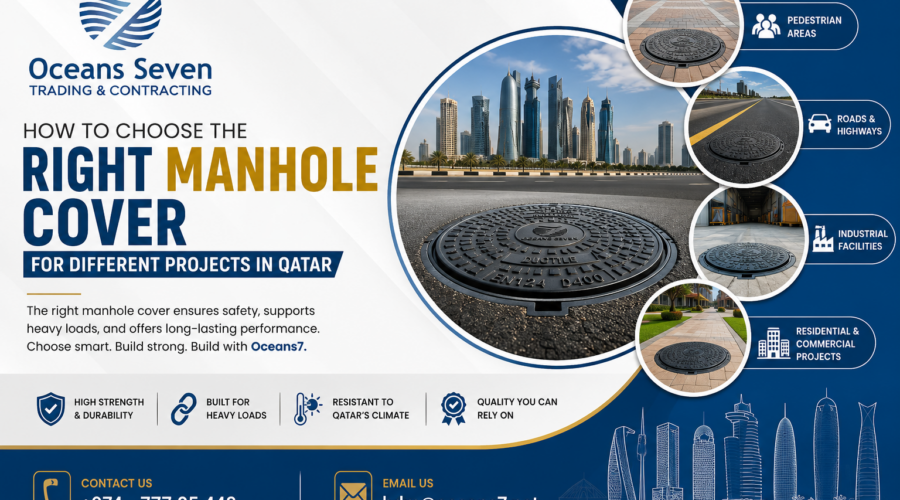
How to Choose the Right Manhole Cover for Different Projects in Qatar

Manhole covers are often treated as a standard purchase, but selecting the wrong one can create expensive maintenance issues, safety concerns, and premature damage. Every project has different requirements based on location, traffic, environmental conditions, and the type of utility beneath the surface. In Qatar, where roads experience high temperatures, heavy vehicles, and rapid infrastructure growth, choosing the correct manhole cover is more important than many project owners realize. This guide explains what to consider before making your decision. Why the Right Manhole Cover Matters A manhole cover does much more than close an underground chamber. It protects utility networks, prevents accidental access, supports vehicle loads, and helps maintain safe surroundings. A poorly selected cover may result in: Surface cracks around the frame Unstable covers that move under traffic Higher maintenance costs Increased safety risks for pedestrians and vehicles Faster wear caused by environmental conditions Using the appropriate cover from the beginning reduces future repairs and improves the overall life of the installation. Start by Understanding the Installation Location The first question is simple. Where will the manhole cover be installed? Different locations demand different performance levels. Residential Areas For villas, housing communities, and landscaped spaces, pedestrian safety and appearance are usually the priority. These locations generally require lighter duty covers because they are exposed to minimal vehicle traffic. Commercial Buildings Shopping centres, office complexes, hotels, and educational institutions often experience a combination of pedestrians and service vehicles. Medium duty covers usually provide the right balance between strength and practicality. Roads and Highways Public roads experience constant movement from passenger vehicles, buses, and heavy trucks. These installations require covers specifically designed to withstand repeated dynamic loads without shifting or cracking. Industrial Facilities Factories, logistics centres, ports, and construction zones operate with extremely heavy equipment. Choosing covers designed for high load applications helps reduce long term maintenance and unexpected failures. Consider the Expected Traffic Load Not every cover is built for the same purpose. Installing a lightweight cover in a heavy traffic area can cause serious structural problems. Before selecting a product, evaluate: Vehicle weight Frequency of traffic Type of vehicles using the area Future expansion plans If a site is expected to handle increased traffic over time, selecting a stronger cover during construction is often a smarter investment. Material Selection Makes a Difference Modern projects use several types of manhole covers, each with its own advantages. Ductile Iron Ductile iron is widely preferred because it combines strength with durability. It performs well under continuous traffic and offers excellent resistance to impact. Composite Covers Composite manhole covers are lightweight, corrosion resistant, and easier to handle during maintenance. They are suitable for many utility applications where theft prevention and reduced weight are important considerations. Cast Iron Traditional cast iron covers are still found in older installations but are gradually being replaced in many projects by ductile iron alternatives because of improved mechanical performance. Qatar’s Climate Should Never Be Ignored Extreme temperatures place additional stress on construction materials. Daily heat, sand, dust, and occasional heavy rainfall all influence long term performance. Choosing products manufactured for these environmental conditions helps reduce: Surface deterioration Corrosion Material fatigue Premature replacement Quality materials generally provide better stability throughout the year. Check Frame and Cover Compatibility A strong cover alone is not enough. The frame must also fit correctly and remain stable after installation. Improper alignment can cause movement, noise, uneven surfaces, and additional stress around the surrounding concrete. Professional installation plays an important role in achieving long service life. Think Beyond the Initial Purchase Price Choosing the least expensive option can sometimes increase total project costs. Lower quality products may require: Frequent repairs Earlier replacement Traffic disruptions during maintenance Additional labour expenses Looking at the overall service life often provides a better measure of value than comparing purchase prices alone. Compliance with Industry Standards Reliable manufacturers produce manhole covers that comply with recognised international standards for strength and performance. Always verify product specifications before purchasing, especially for government, commercial, and infrastructure projects. Proper certification provides greater confidence in long term performance. Work with an Experienced Supplier Selecting the right supplier is as important as selecting the product itself. An experienced supplier can help identify the correct solution based on: Project type Installation environment Traffic conditions Utility requirements Maintenance expectations This guidance helps avoid specification errors that may become costly after installation. Oceans7 Solutions for Infrastructure Projects At Oceans7, we supply durable manhole covers designed for a wide range of applications across Qatar. Whether the requirement is for residential developments, commercial buildings, municipal works, or industrial facilities, our team helps clients select products that match both technical requirements and site conditions. In addition to manhole covers, Oceans7 also supplies a wide range of infrastructure products that support modern construction projects. You can also explore our solutions for drainage systems, access covers, and other civil infrastructure materials available across Qatar. Every construction project has unique demands, and there is no single manhole cover suitable for every location. Traffic conditions, material selection, installation quality, and environmental exposure all influence long term performance. Choosing carefully at the planning stage helps reduce maintenance, improve safety, and protect infrastructure for many years. Working with a knowledgeable supplier also makes the selection process easier and ensures the product matches the needs of the project instead of relying on assumptions.

READ MORE

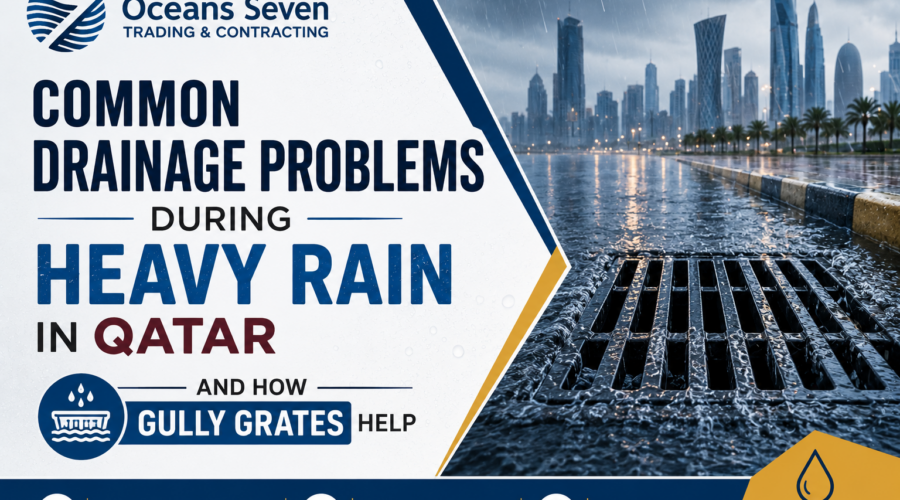
Common Drainage Problems During Heavy Rain in Qatar and How Gully Grates Help

Although Qatar is known for its hot and dry weather, heavy rainfall can sometimes arrive without much warning. When large amounts of rain fall within a short time, roads, parking areas, villas, warehouses, and commercial buildings can quickly experience water accumulation. If the drainage system is not designed properly, even a brief rain shower can lead to expensive repairs and safety concerns. One simple but important part of every drainage system is the gully grate. It helps collect rainwater efficiently while preventing debris from entering the drainage network. Choosing the right gully grate can make a significant difference in keeping outdoor spaces safe and functional. Why Drainage Matters in Qatar Modern buildings in Qatar include paved driveways, landscaped areas, parking lots, industrial zones, and commercial complexes. During heavy rain, these surfaces do not absorb water naturally. Instead, rainwater flows across the surface and must be directed into the drainage system as quickly as possible. Without proper drainage, water can remain on the surface, creating inconvenience for people and increasing the risk of property damage. Common Drainage Problems During Heavy Rain 1. Water Collecting in Parking Areas Parking spaces are among the first places where rainwater collects. Standing water makes it difficult for vehicles to move safely and can create slippery conditions for pedestrians. A properly positioned gully grate helps move water into the drainage system before it spreads across the entire parking area. 2. Blocked Drainage Channels Leaves, sand, plastic waste, and other debris often enter drainage channels during rainfall. When drains become blocked, water cannot flow freely, resulting in flooding around buildings and walkways. Quality gully grates help reduce the amount of large debris entering the drainage system while still allowing rainwater to pass through efficiently. 3. Water Entering Building Entrances When water collects near entrances, it may flow inside offices, retail stores, warehouses, or residential buildings. This can damage flooring, furniture, electrical systems, and stored materials. Installing drainage channels with suitable gully grates near entrances helps divert water before it reaches the building. 4. Flooded Industrial and Commercial Facilities Industrial areas often have large open spaces where rainwater can spread quickly. Water accumulation can interrupt daily operations, affect loading areas, and create unsafe working conditions. A well planned drainage system fitted with durable gully grates helps maintain smooth operations even during heavy rainfall. 5. Damage to Landscaped Areas Poor drainage may cause water to remain around gardens and landscaped spaces. Over time, this can affect plants, soil stability, and surrounding pathways. Proper drainage allows excess water to leave the area while helping maintain attractive outdoor spaces. How Gully Grates Improve Drainage Performance Gully grates are designed to cover drainage openings while allowing rainwater to enter the drainage system. Their benefits include: Efficient collection of rainwater Reduced risk of drain blockages Improved pedestrian safety Protection for underground drainage systems Strong support for pedestrian and vehicle traffic Long service life with minimal maintenance Choosing the Right Gully Grate Not every project requires the same type of gully grate. The right choice depends on the location, expected traffic, drainage requirements, and environmental conditions. For example: Villas and residential buildings require reliable drainage around driveways and gardens. Commercial buildings need strong grates that can handle regular pedestrian traffic. Warehouses and industrial facilities require heavy duty solutions capable of supporting larger vehicles. Public spaces and parking areas benefit from corrosion resistant products designed for long term outdoor use. Selecting the correct product during construction helps reduce future maintenance costs and improves drainage efficiency. Why Quality Matters A poorly made grate may crack, rust, or become loose over time. Replacing damaged drainage components can interrupt daily operations and increase maintenance expenses. Investing in high quality gully grates provides dependable performance, better durability, and greater safety for years to come. Heavy rainfall may not occur every day in Qatar, but when it does, an efficient drainage system becomes essential. Water accumulation can affect roads, buildings, parking areas, and commercial facilities within a short period. Installing high quality gully grates as part of a well planned drainage system helps control rainwater, reduce flooding risks, and protect valuable infrastructure. Whether it is a residential project, commercial property, or industrial facility, the right drainage solution contributes to safer and more reliable performance throughout the year.

READ MORE

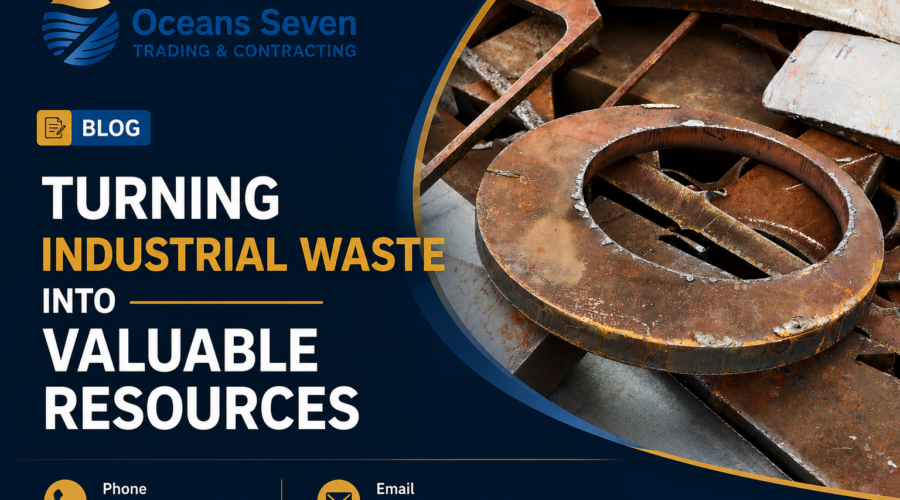
Turning Industrial Waste into Valuable Resources

Every construction site, factory, warehouse, and industrial facility produces scrap materials during daily operations. Instead of allowing these materials to occupy valuable space or become a disposal challenge, businesses across Qatar are choosing professional scrap recycling services that convert waste into reusable resources. At Oceans Seven Trading & Contracting, we help industries manage scrap efficiently through reliable collection, sorting, processing, and recycling services. Whether you have a small quantity of metal or large scale industrial scrap, our team ensures every material is handled responsibly and professionally. Why Scrap Recycling Matters Scrap recycling is more than simply removing unwanted materials. It helps businesses recover value from discarded metals while supporting cleaner work environments and reducing the demand for newly mined raw materials. Companies that recycle their industrial scrap often benefit from: Better use of storage space Improved site safety Responsible waste management Reduced environmental impact Additional value from recyclable materials For industries handling large volumes of metal waste, an organised recycling process can become an important part of daily operations. Materials We Handle Our scrap division purchases and processes a wide range of recyclable materials from construction companies, manufacturers, fabrication units, commercial facilities, and infrastructure projects throughout Qatar. Some of the commonly accepted materials include: Copper Aluminium Stainless Steel Mild Steel Brass Bronze Lead Nickel Alloys Tin Zinc Industrial Machinery Chillers and Air Conditioning Units Electronic Waste Building Materials Each material is inspected and sorted carefully before entering the recycling process. Industrial Scrap Collection Across Qatar Many businesses generate scrap regularly but may not have the resources to transport or manage it efficiently. Our team provides organised scrap collection services that help businesses clear unwanted materials without interrupting ongoing operations. From factory cleanouts to construction site collections, we work according to your project schedule and material volume. Responsible Processing for Better Results Every type of scrap has its own recycling requirements. Proper identification, sorting, and processing improve the quality of recyclable materials and help maximise their value. Our recycling facilities are equipped to process both ferrous and non ferrous metals while maintaining high standards throughout the operation. Industries We Serve Our scrap recycling solutions support businesses from different sectors, including: Construction Companies Manufacturing Industries Fabrication Workshops Infrastructure Projects Engineering Companies Hospitals Warehouses Commercial Facilities Government Projects No matter the project size, we provide dependable recycling support based on your operational requirements. Why Choose Oceans Seven for Scrap Recycling in Qatar? Businesses choose Oceans Seven because we combine industry experience with practical recycling solutions. Our strengths include: Reliable scrap collection Competitive pricing Professional material assessment Experienced recycling team Industrial and commercial recycling expertise Support for both ferrous and non ferrous metals Commitment to responsible recycling practices Our objective is to help businesses manage scrap efficiently while recovering maximum value from recyclable materials. Looking for Scrap Buyers in Qatar? If your business regularly generates metal scrap or industrial waste, Oceans Seven Trading & Contracting is ready to assist. From collection and sorting to processing and recycling, we provide complete scrap management solutions for projects across Qatar. Contact our team today to discuss your recycling requirements and receive professional support tailored to your business.

READ MORE

The Costly Mistake Many Qatar Builders Make Before Project Handover

A project can take months or even years to complete. Teams invest heavily in planning, materials, manpower, quality control, and finishing. Yet, some of the most expensive problems emerge only after the building is handed over. Surprisingly, many of these issues have one thing in common. Water. Not major flooding. Not structural failures. Just small, unnoticed water intrusion that gradually turns into a serious liability. For builders across Qatar, delayed waterproofing decisions can trigger repair costs, client dissatisfaction, project disputes, and long term damage to reputation. The Problem Does Not Start with a Leak Many contractors assume waterproofing becomes important only when water starts appearing inside a building. In reality, the problem begins much earlier. A minor weakness in a roof membrane, an improperly treated expansion joint, or an inadequately protected basement wall may remain unnoticed for months. During this period, moisture slowly penetrates the structure and starts affecting concrete, steel reinforcement, finishes, paint systems, insulation, and interior spaces. By the time visible signs appear, the repair cost is often significantly higher than the original waterproofing investment. Why Qatar Construction Projects Face Greater Risk Qatar’s construction environment presents unique challenges. Extreme temperatures, humidity variations, occasional heavy rainfall, underground water exposure, and rooftop heat stress continuously test the performance of building materials. The most vulnerable areas include: * Roof slabs* Basements* Podium decks* Swimming pools* Water tanks* Wet areas* Lift pits* Retaining walls* Expansion joints These areas require protection from the beginning of the project lifecycle rather than corrective action after defects appear. The Real Price of Delayed Waterproofing When waterproofing is postponed, downgraded, or treated as a finishing activity, the consequences can extend far beyond repair work. Builders may face: Project Delays Correcting water related defects often requires dismantling completed finishes, disrupting schedules, and coordinating multiple trades simultaneously. Increased Costs The cost of repairing leaks is frequently several times higher than installing the correct waterproofing system during construction. Client Complaints Even a single leak can affect the perception of an otherwise successful project. Property owners expect durability from day one. Reduced Asset Value Persistent moisture issues can negatively impact the market value and long term performance of residential, commercial, and industrial properties. Reputation Risk In today’s competitive construction sector, reputation remains one of the most valuable assets a builder possesses. Quality concerns can influence future opportunities and client confidence. Successful Builders Think Beyond Construction Leading builders in Qatar no longer view waterproofing as a protective layer. They view it as risk management. Every properly waterproofed roof, basement, swimming pool, and water retaining structure reduces future uncertainty. It protects investments, minimizes maintenance requirements, and supports long term building performance. The most successful projects are often the ones where problems never occur. A Protection Strategy, Not a Product Every structure presents different requirements. A villa, commercial tower, industrial facility, warehouse, or infrastructure project cannot rely on the same waterproofing approach. An effective protection strategy considers: * Structural design* Exposure conditions* Water pressure* Material compatibility* Surface preparation* Application quality* Long term maintenance requirements This is why professional assessment and system selection are critical to achieving reliable performance. Building Confidence Before Handover The period before project handover is often when builders focus on aesthetics, documentation, inspections, and final approvals. However, long term building performance depends on what lies beneath the surface. Waterproofing remains one of the most important investments a builder can make to protect structural integrity, maintain client satisfaction, and reduce future liabilities. At Oceans Seven Trading & Contracting, we support builders, developers, consultants, and property owners across Qatar with waterproofing, epoxy flooring, and protective coating solutions designed for demanding environments and long term reliability. Because successful projects are not measured only by how they look on handover day. They are measured by how they perform for years to come.

READ MORE

Best Waterproofing Solutions for Qatar’s Climate

Find the best waterproofing solutions designed for Qatar’s hot and humid climate to protect buildings from heat, moisture and damage. Why is Waterproofing Essential in Qatar ?At Oceans Seven, we fully understand the challenges that Qatar’s climate poses to buildings. Extreme heat, high humidity and sudden rainfall can significantly impact the structural integrity of our buildings, if proper waterproofing is not in place.Without effective protection, moisture infiltration can lead to cracks, damp walls, mould growth and long-term structural damage. That’s why choosing the best waterproofing solutions is critical for both residential and commercial properties. Roof Waterproofing: Protecting Your Structure from Above.Roofs are constantly exposed to the harsh sunlight and temperature fluctuations. Over time, this leads to expansion and contraction, eventually resulting in cracks.Our roof water proofing solutions are designed to withstand Qatar’s extreme  climatic conditions and include: ● UV-resistant polyurethane coatings.● Acrylic waterproofing systems.● Advanced crack sealing techniques. These solutions not only prevent the water leakage but also enhance thermal performance, helping reduce indoor heat. Wall & Basement Waterproofing for Long Term Protection.Walls and basements are vulnerable to moisture penetration, especially in humid conditions. Over time, this can weaken the structural integrity of the building and cause visible damage like peeling of the paint and damp patches. Reliable waterproofing services mainly focus on:● Cementitious coatings.● Crystalline waterproofing systems.● Injection grouting for cracks. These solutions can create a strong barrier that stops the water from entering the structure. Wet Area Waterproofing: Prevent Hidden DamageOur bathrooms, kitchen and water tanks are constant and unavoidable sources of moisture. Without introducing the proper waterproofing techniques, the moisture can get into the surrounding areas slowly. Advanced solutions for this, include:● Flexible waterproof coatings.● Fiber mesh reinforcement.● Coherent protective cover. These methods will ensure long term protection against leakage and internal damage. Choosing the Best Waterproofing SolutionsNot all waterproofing solutions apply over Qatar’s climate conditions. The right solution depends on;● Type of structure (residential, commercial, industrial).● Heat and Moisture Exposure.● Type of construction materials. The key is to use heat resistant, durable and climate specific systems that are able to withstand extreme conditions. Why Choose Oceans 7 for Waterproofing in Qatar ?We feel proud of providing best waterproofing solutions that will last long in the hot weather of Qatar.What we promise with Oceans Seven is the following:● Professional waterproofing solutions for all types of buildings.● Materials of high quality and innovative techniques of application.● Protection from the hot environment for years to come.Let us help you protect your property.

READ MORE

Why High Quality Manhole Covers Are Essential for Modern Infrastructure

Modern infrastructure depends on strong, reliable systems that operate safely every day. Roads, drainage networks, sewage systems, telecommunications lines, and utility connections all require secure access points. One of the most important yet often overlooked components in these systems is the manhole cover. High quality manhole covers play a critical role in safety, durability, and long term performance. Ensuring Public Safety Manhole covers are installed in roads, pedestrian walkways, industrial zones, airports, and residential areas. A weak or poorly manufactured cover can crack, shift, or collapse under pressure. This creates serious safety risks for vehicles and pedestrians. High quality manhole covers are engineered to withstand heavy traffic loads and environmental stress. They are tested according to load classifications suitable for highways, commercial spaces, and industrial sites. Properly fitted and durable covers prevent accidents, reduce liability risks, and protect public safety in high traffic zones. Supporting Heavy Load Requirements Urban development continues to expand with increased vehicle density and heavier transport vehicles. Infrastructure must be capable of handling this load without failure. Premium manhole covers, especially ductile iron and composite variants, are designed to meet strict load bearing standards. They distribute weight evenly and maintain structural integrity even under continuous pressure. Using substandard products may reduce initial costs but often results in premature damage and expensive replacements. Enhancing Durability and Longevity Infrastructure projects are long term investments. Materials used must perform reliably for decades. High quality manhole covers are resistant to corrosion, moisture, chemicals, and extreme weather conditions. In regions with high humidity or saline environments, corrosion resistant materials such as composite or coated ductile iron are highly effective. These materials reduce maintenance needs and extend service life, ensuring consistent performance with minimal operational disruption. Reducing Maintenance Costs Low grade covers often require frequent repairs due to cracking, rusting, or displacement. This increases maintenance budgets and creates recurring service interruptions. High quality manhole covers provide better fitting mechanisms, secure locking systems, and superior resistance to wear. This reduces noise, vibration, and movement caused by traffic. As a result, infrastructure authorities and contractors benefit from lower maintenance expenses and fewer emergency replacements. Improving Security and Theft Prevention Metal theft remains a major issue in many regions. Traditional cast iron covers are vulnerable to theft due to scrap value. Missing covers create dangerous open access points. Advanced composite manhole covers offer a significant advantage because they do not have scrap resale value. Many high quality designs also include locking systems that prevent unauthorized access. This improves security for underground utilities and reduces risks of vandalism. Meeting Modern Infrastructure Standards Smart cities and modern infrastructure demand reliable, sustainable solutions. High quality manhole covers are designed with precision engineering to meet international standards for strength, durability, and environmental performance. Many modern covers are lightweight, which simplifies installation and reduces handling risks for workers. Composite options are also non conductive and non corrosive, making them ideal for electrical and telecommunication networks. Supporting Drainage and Utility Efficiency Effective drainage systems depend on properly sealed and aligned access covers. Poor quality products can allow water infiltration, debris entry, or misalignment that affects underground systems. Precision manufactured manhole covers ensure proper sealing and stability. This protects underground pipelines, reduces blockages, and maintains system efficiency in both residential and industrial environments. A Critical Component in Urban Development From highways and airports to residential communities and industrial facilities, manhole covers are fundamental to infrastructure performance. Though often unnoticed, they contribute directly to road safety, structural reliability, and utility protection. Investing in high quality manhole covers is not just about compliance. It is about protecting public safety, reducing long term operational costs, and ensuring dependable infrastructure performance. For contractors, municipalities, and developers, selecting durable and certified manhole covers is a strategic decision that supports modern infrastructure growth and long term sustainability.

READ MORE

Why Good Drain Covers Matter for Your Home

In Qatar, homes and buildings face unique environmental conditions that make proper drainage systems essential. High temperatures, sudden rainfall, sandy surroundings, and heavy usage of water systems place extra pressure on drainage networks. While many property owners focus on waterproofing and surface protection, drain covers are often overlooked. In reality, good drain covers play a vital role in protecting homes from water damage, hygiene risks, and long term structural issues. Managing Sudden Rainfall and Water Flow Although Qatar is known for its dry climate, rainfall often comes unexpectedly and in short, intense bursts. When drainage systems are not properly protected, water can accumulate quickly on roofs, parking areas, balconies, and basements. High quality drain covers help regulate water flow and prevent surface flooding. They allow water to drain efficiently while blocking sand, debris, and waste materials that commonly enter drains during storms. This is especially important for villas, compounds, and commercial buildings where water backup can cause serious damage within a short time. Protection Against Sand and Debris Sand is a constant challenge in Qatar. Wind carried sand can easily enter open drains and channels, leading to blockages over time. Once blocked, drains stop functioning properly and water starts stagnating around foundations and paved areas. Strong drain covers act as a protective shield against sand accumulation. Properly designed openings allow water to pass while keeping unwanted particles out. This reduces maintenance frequency and prevents internal pipe damage caused by sediment buildup. Preventing Structural Damage in Villas and Buildings Water stagnation around buildings is one of the main causes of long term structural problems. When drains fail, water seeps into walls, basements, and flooring, weakening concrete and causing cracks and damp patches. In Qatar, where construction materials are exposed to high heat, moisture damage can accelerate deterioration. Durable drain covers help maintain effective drainage and reduce the risk of water penetration. This supports the overall lifespan of the structure and protects property value. Improving Safety in Residential and Commercial Areas Open or damaged drains pose safety risks, especially in high traffic areas such as parking zones, walkways, and common areas. Slippery surfaces combined with exposed drainage openings increase the risk of accidents. Quality drain covers provide a secure and stable surface that supports regular movement and vehicle load where required. Anti slip designs are especially useful in wet areas such as bathrooms, pool surroundings, and service zones, improving safety for residents, staff, and visitors. Supporting Hygiene and Pest Control Stagnant water and uncovered drains attract insects and pests, which can become a serious concern in warmer climates. Mosquito breeding and unpleasant odors are common problems when drainage systems are not properly sealed. Well fitted drain covers reduce exposure to wastewater and limit pest entry points. This helps maintain better hygiene standards and contributes to a healthier living environment, especially for family homes and residential communities. Enhancing the Look of Modern Properties Modern homes and commercial spaces in Qatar focus on clean design and premium finishes. Poor quality drain covers can affect the overall appearance of floors, driveways, and outdoor areas. Today’s drain covers are available in sleek designs using corrosion resistant materials that blend well with contemporary architecture. Choosing the right cover improves both function and visual appeal without drawing attention to the drainage system itself. Long Term Cost Benefits Ignoring drainage components can lead to frequent repairs, pipe replacements, and waterproofing failures. Over time, these costs can exceed the price of installing quality drain covers from the beginning. Durable drain covers reduce blockage issues, lower maintenance needs, and protect surrounding surfaces. This makes them a smart investment for homeowners, builders, and property managers looking for reliable long term solutions. Choosing the Right Drain Covers Different areas require different drainage solutions. Roof drains, balconies, basements, parking areas, and external channels all need covers suited to water volume, load capacity, and environmental exposure. Professional selection ensures that drain covers match site requirements and perform effectively under Qatar’s climate conditions. Expert installation further improves durability and performance. A Small Detail That Makes a Big Difference Drain covers may seem like a minor element, but their impact on home protection is significant. From preventing blockages and water damage to improving safety and hygiene, they play an essential role in maintaining strong and reliable drainage systems. For homes and buildings in Qatar, investing in quality drain covers is a practical step toward long lasting protection and peace of mind.

READ MORE
Translate »