 By
By Manhole covers are often treated as a standard purchase, but selecting the wrong one can create expensive maintenance issues, safety concerns, and premature damage. Every project has different requirements based on location, traffic, environmental conditions, and the type of utility beneath the surface.
In Qatar, where roads experience high temperatures, heavy vehicles, and rapid infrastructure growth, choosing the correct manhole cover is more important than many project owners realize.
This guide explains what to consider before making your decision.
Why the Right Manhole Cover Matters
A manhole cover does much more than close an underground chamber. It protects utility networks, prevents accidental access, supports vehicle loads, and helps maintain safe surroundings.
A poorly selected cover may result in:
- Surface cracks around the frame
- Unstable covers that move under traffic
- Higher maintenance costs
- Increased safety risks for pedestrians and vehicles
- Faster wear caused by environmental conditions
Using the appropriate cover from the beginning reduces future repairs and improves the overall life of the installation.
Start by Understanding the Installation Location
The first question is simple.
Where will the manhole cover be installed?
Different locations demand different performance levels.
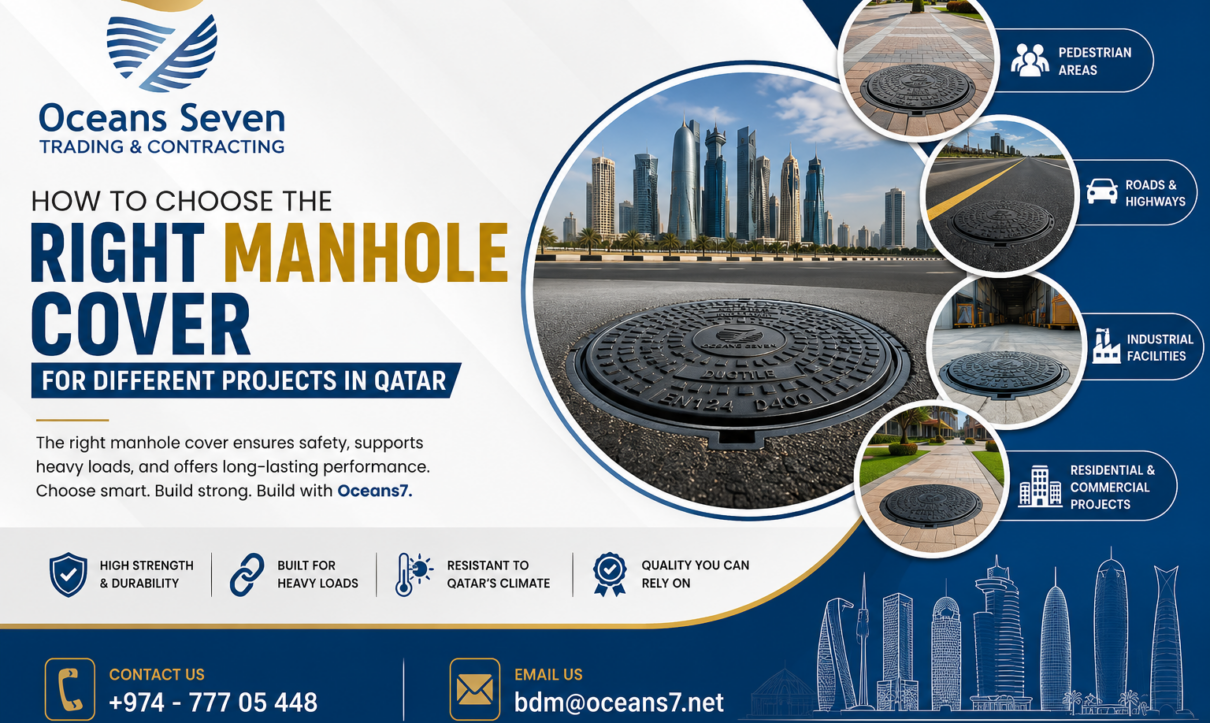
Residential Areas
For villas, housing communities, and landscaped spaces, pedestrian safety and appearance are usually the priority. These locations generally require lighter duty covers because they are exposed to minimal vehicle traffic.
Commercial Buildings
Shopping centres, office complexes, hotels, and educational institutions often experience a combination of pedestrians and service vehicles. Medium duty covers usually provide the right balance between strength and practicality.
Roads and Highways
Public roads experience constant movement from passenger vehicles, buses, and heavy trucks. These installations require covers specifically designed to withstand repeated dynamic loads without shifting or cracking.
Industrial Facilities
Factories, logistics centres, ports, and construction zones operate with extremely heavy equipment. Choosing covers designed for high load applications helps reduce long term maintenance and unexpected failures.
Consider the Expected Traffic Load
Not every cover is built for the same purpose.
Installing a lightweight cover in a heavy traffic area can cause serious structural problems.
Before selecting a product, evaluate:
- Vehicle weight
- Frequency of traffic
- Type of vehicles using the area
- Future expansion plans
If a site is expected to handle increased traffic over time, selecting a stronger cover during construction is often a smarter investment.
Material Selection Makes a Difference
Modern projects use several types of manhole covers, each with its own advantages.
Ductile Iron
Ductile iron is widely preferred because it combines strength with durability. It performs well under continuous traffic and offers excellent resistance to impact.
Composite Covers
Composite manhole covers are lightweight, corrosion resistant, and easier to handle during maintenance. They are suitable for many utility applications where theft prevention and reduced weight are important considerations.
Cast Iron
Traditional cast iron covers are still found in older installations but are gradually being replaced in many projects by ductile iron alternatives because of improved mechanical performance.
Qatar’s Climate Should Never Be Ignored
Extreme temperatures place additional stress on construction materials.
Daily heat, sand, dust, and occasional heavy rainfall all influence long term performance.
Choosing products manufactured for these environmental conditions helps reduce:
- Surface deterioration
- Corrosion
- Material fatigue
- Premature replacement
Quality materials generally provide better stability throughout the year.
Check Frame and Cover Compatibility
A strong cover alone is not enough.
The frame must also fit correctly and remain stable after installation.
Improper alignment can cause movement, noise, uneven surfaces, and additional stress around the surrounding concrete.
Professional installation plays an important role in achieving long service life.
Think Beyond the Initial Purchase Price
Choosing the least expensive option can sometimes increase total project costs.
Lower quality products may require:
- Frequent repairs
- Earlier replacement
- Traffic disruptions during maintenance
- Additional labour expenses
Looking at the overall service life often provides a better measure of value than comparing purchase prices alone.
Compliance with Industry Standards
Reliable manufacturers produce manhole covers that comply with recognised international standards for strength and performance.
Always verify product specifications before purchasing, especially for government, commercial, and infrastructure projects.
Proper certification provides greater confidence in long term performance.
Work with an Experienced Supplier
Selecting the right supplier is as important as selecting the product itself.
An experienced supplier can help identify the correct solution based on:
- Project type
- Installation environment
- Traffic conditions
- Utility requirements
- Maintenance expectations
This guidance helps avoid specification errors that may become costly after installation.
Oceans7 Solutions for Infrastructure Projects
At Oceans7, we supply durable manhole covers designed for a wide range of applications across Qatar. Whether the requirement is for residential developments, commercial buildings, municipal works, or industrial facilities, our team helps clients select products that match both technical requirements and site conditions.
In addition to manhole covers, Oceans7 also supplies a wide range of infrastructure products that support modern construction projects. You can also explore our solutions for drainage systems, access covers, and other civil infrastructure materials available across Qatar.
Every construction project has unique demands, and there is no single manhole cover suitable for every location. Traffic conditions, material selection, installation quality, and environmental exposure all influence long term performance.
Choosing carefully at the planning stage helps reduce maintenance, improve safety, and protect infrastructure for many years. Working with a knowledgeable supplier also makes the selection process easier and ensures the product matches the needs of the project instead of relying on assumptions.