 By
Drainage may not be the first thing people notice in a completed building or outdoor area, but it plays an important role in keeping surfaces usable and protected. The type of grate selected for a drainage system can influence how efficiently surface water is collected and how well the drainage installation suits its surroundings.
Gully grates and channel grates both help manage surface water, but they are used in different drainage arrangements. Choosing between them should therefore depend on the layout of the area, expected water flow, traffic conditions and the type of project.
Where Gully Grates Fit Best
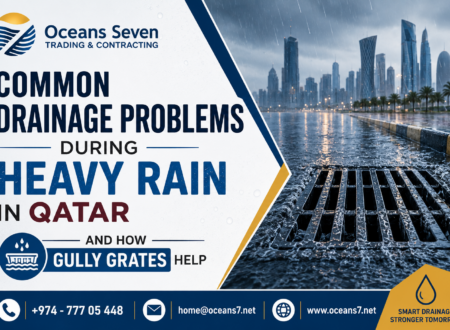
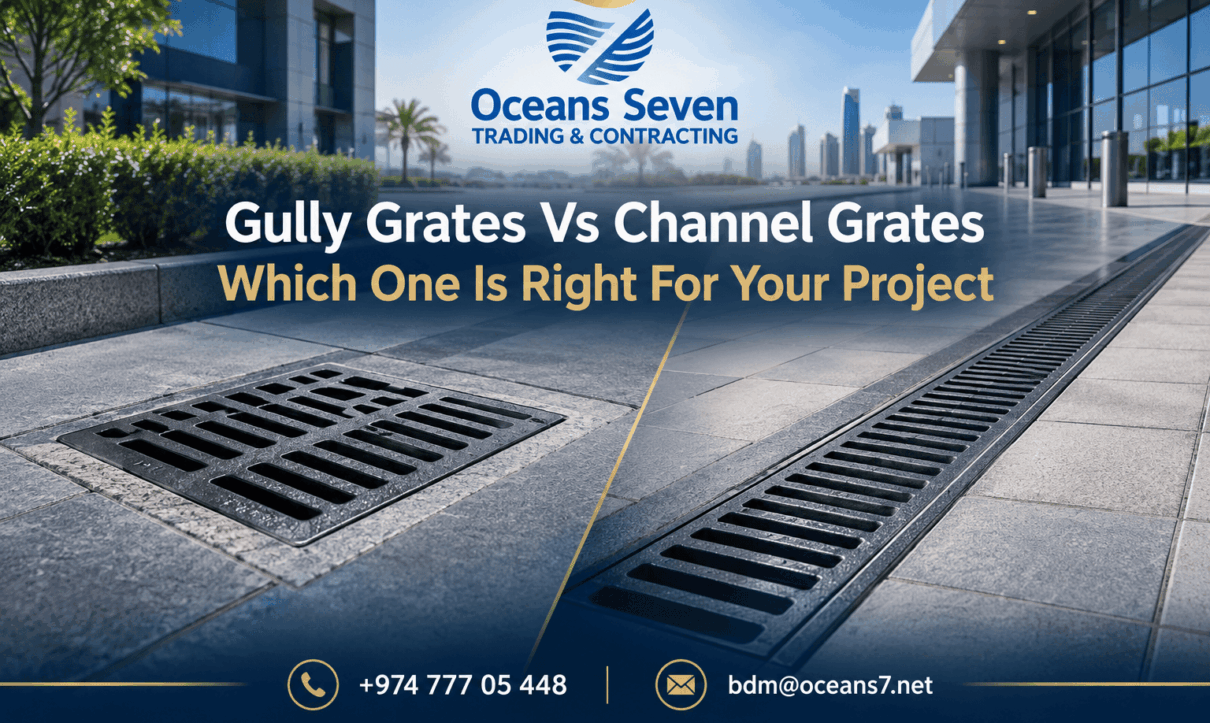
Gully grates are commonly positioned over drainage gullies where water needs to enter a collection point below the surface. They can be suitable for areas such as roads, parking spaces, commercial properties and other locations where surface water needs to be directed into a drainage network.
For areas exposed to vehicles or heavier loads, ductile iron can be a practical choice because of its strength and durability. Oceans Seven supplies ductile iron gully grates for applications across residential, commercial and infrastructure projects in Qatar.
Where Channel Grates Make More Sense
Channel drainage works differently. Instead of directing water towards a single collection point, a channel provides a continuous drainage path along a selected section of the surface. A grate placed over the channel allows water to enter while providing a finished surface above it.
This arrangement can be useful around larger paved areas, entrances, walkways, commercial spaces and other locations where water needs to be collected across a longer line.
Oceans Seven offers ductile iron channel grates as part of its drainage product range, along with linear grate options for different project requirements.
The Choice Depends On The Project Layout
There is no single grate that suits every drainage requirement. A gully grate can work well when water is directed towards specific collection points. A channel grate can be more suitable when drainage needs to run along a particular length of a surface.
The surrounding conditions matter too. Vehicle movement, pedestrian use, expected water volume, installation location and the overall drainage design should all be considered before selecting a grate.
Think Beyond Appearance
A drainage grate is part of a working system rather than simply a surface fitting. The opening pattern, material, load requirements and location can all affect how well the installation performs over time.
For pedestrian areas, options such as polypropylene anti heel grates can also be considered where the design needs to account for pedestrian movement. Oceans Seven includes these within its range of gully and channel drainage products.
Choosing The Right Option For Your Project
The best choice starts with understanding how water moves through the site. Consider where water collects, how it needs to leave the area and what type of traffic the grate will experience.
For projects in Qatar, Oceans Seven provides a range of gully and channel grates for residential, commercial and industrial applications. The available range includes ductile iron gully grates, ductile iron channel grates, linear grates and polypropylene anti heel grates.
A well selected drainage grate can become an important part of a practical surface drainage system. The right option is ultimately the one that matches the site’s drainage layout, usage conditions and project requirements.