
 By
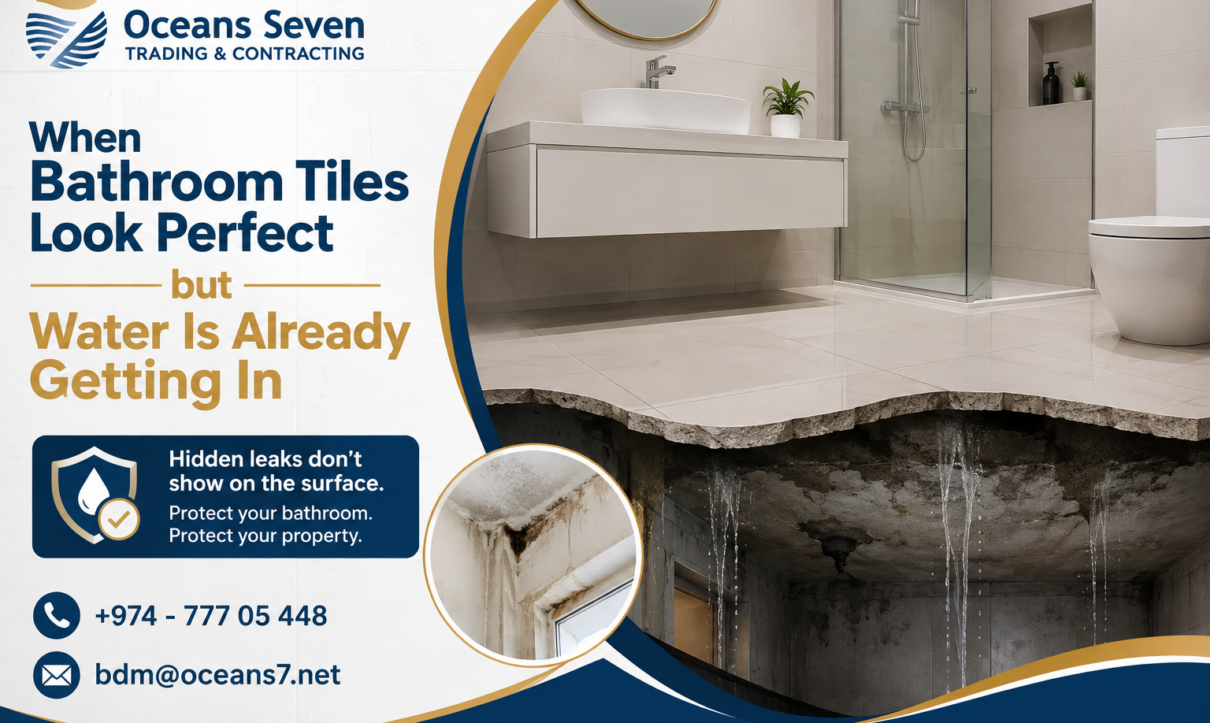
By When Bathroom Tiles Look Perfect but Water Is Already Getting In
A bathroom can look completely finished. The tiles are attractive, the grout lines appear clean, and the floor seems to handle everyday water without any problem. Yet moisture can still be finding its way beneath the surface.
This is one of the reasons bathroom waterproofing is often misunderstood. Tiles create a durable and water resistant surface, but they are not the complete waterproofing system. Water can enter through grout joints, corners, movement points and areas around pipes and drains. Once moisture reaches the layer beneath the tiles, the problem may continue without being immediately visible.
What Happens Beneath the Tiles?
Every shower, bath and bathroom wash exposes the surrounding surfaces to water. Some of that water can pass through tiny openings in grout or around joints. If there is no properly installed waterproof barrier underneath, moisture can reach the substrate.
The visible signs may appear somewhere else.
A damp patch can develop on the wall next to the bathroom. Paint may begin to peel in an adjoining room. A ceiling below may show staining. In some cases, the bathroom itself may continue looking perfectly normal while moisture is slowly affecting the structure beneath it.
That is why locating the visible stain is not always the same as identifying the source of the problem.
Grout Is Not a Substitute for Waterproofing
Grout has an important role in a tiled surface. It fills the spaces between tiles and helps create a finished, stable surface. However, grout should not be treated as the primary waterproofing barrier.
Over time, grout can develop fine cracks or gaps. Building movement, regular cleaning, temperature changes and repeated exposure to moisture can also affect joints and sealants. Water can then find small pathways into the layers below.
Technical guidance for wet areas places the waterproofing membrane behind or beneath the tiled surface, with particular attention given to joints, corners, drains and pipe penetrations.
The Vulnerable Areas Are Often the Smallest Details
A bathroom does not leak only because of a large crack.
The connection between the floor and wall, the area surrounding a drain, pipe penetrations, shower corners and changes between different surfaces all require careful treatment. These locations can become weak points when waterproofing is incomplete or poorly detailed.
Proper surface preparation is also important. The substrate needs to be suitable for the waterproofing system, and the membrane must be applied correctly before the tile installation begins.
A waterproofing system is therefore not simply a coating spread across a bathroom floor. It involves preparation, application, detailing and protection of vulnerable areas.
Why Wet Areas Require Careful Planning
Bathrooms have a completely different moisture environment from bedrooms, living rooms or corridors. Water is deliberately introduced into the space every day.
Shower areas receive direct water exposure. Bathroom floors deal with standing water and splashing. Steam adds moisture to surrounding surfaces. Drainage points must remove water efficiently, while joints and penetrations need to remain properly sealed.
The waterproofing system needs to work together with the floor slope, drainage arrangement, tile adhesive, grout and sealants. A weakness in one area can eventually affect another.
This is particularly important during new construction and major bathroom renovation. Installing the waterproofing system correctly before the final tiles are fixed gives the building a protective layer that cannot be seen once the bathroom is completed.
What About an Existing Bathroom?
An existing bathroom requires a different approach when seepage has already appeared.
Simply replacing a few tiles or applying a new layer of grout may not solve the underlying issue. The visible damage needs to be assessed to determine whether water has reached the substrate or surrounding structure.
The right repair depends on the source, extent and location of the moisture. In some cases, localised repairs may be sufficient. In others, the affected area may need to be opened up so that the waterproofing layer can be properly restored.
Trying to cover a recurring leak without addressing its source can result in repeated repair work and increasing damage.
Protect the Structure Behind the Finish
Good bathroom design is not only about choosing attractive tiles. What sits behind those tiles matters just as much.
A properly planned waterproofing system helps prevent moisture from reaching the building materials underneath the finished surface. It can also reduce the risk of dampness spreading into adjoining spaces and lower floors.
For property owners, this means waterproofing should be considered during the planning stage rather than only after a leak becomes visible.
At Oceans7, we understand that waterproofing needs to be approached according to the condition and requirements of each property. From wet areas and bathrooms to larger building protection requirements, the focus should be on identifying vulnerable areas and applying a suitable waterproofing system with proper surface preparation and detailing.
A bathroom may hide its waterproofing system completely once the tiles are installed. That does not make it less important. In fact, the layer you cannot see can be the part doing the most important work.