 By
By Where GRP Coating Works Best in Qatar and What It Protects
Buildings and industrial structures in Qatar are exposed to heat, moisture, water, chemicals and demanding operating conditions. Surfaces that regularly come into contact with water or corrosive substances can gradually deteriorate if they are not properly protected.
GRP coating is one option used to protect such surfaces. GRP stands for Glass Reinforced Plastic. It combines resin with glass fibre reinforcement to create a strong protective layer over the existing surface.
The choice of GRP coating depends on the material being protected, its condition and the type of exposure it faces. It is particularly useful in places where ordinary surface finishes may not provide sufficient resistance to water, moisture or chemical exposure.
What Is GRP Coating?
GRP coating is formed by applying resin and glass fibre reinforcement over a prepared surface. Once the materials cure, they form a continuous protective layer.
Unlike systems that depend on multiple joints or overlapping sheets, a properly installed GRP coating can provide a smooth and continuous finish. This makes it suitable for surfaces where water penetration, corrosion or chemical exposure is a concern.
The preparation of the existing surface is also important. Dirt, loose material, moisture and damaged areas need to be addressed before the coating is applied. The condition of the surface determines how the GRP system should be installed.
Where Is GRP Coating Used?
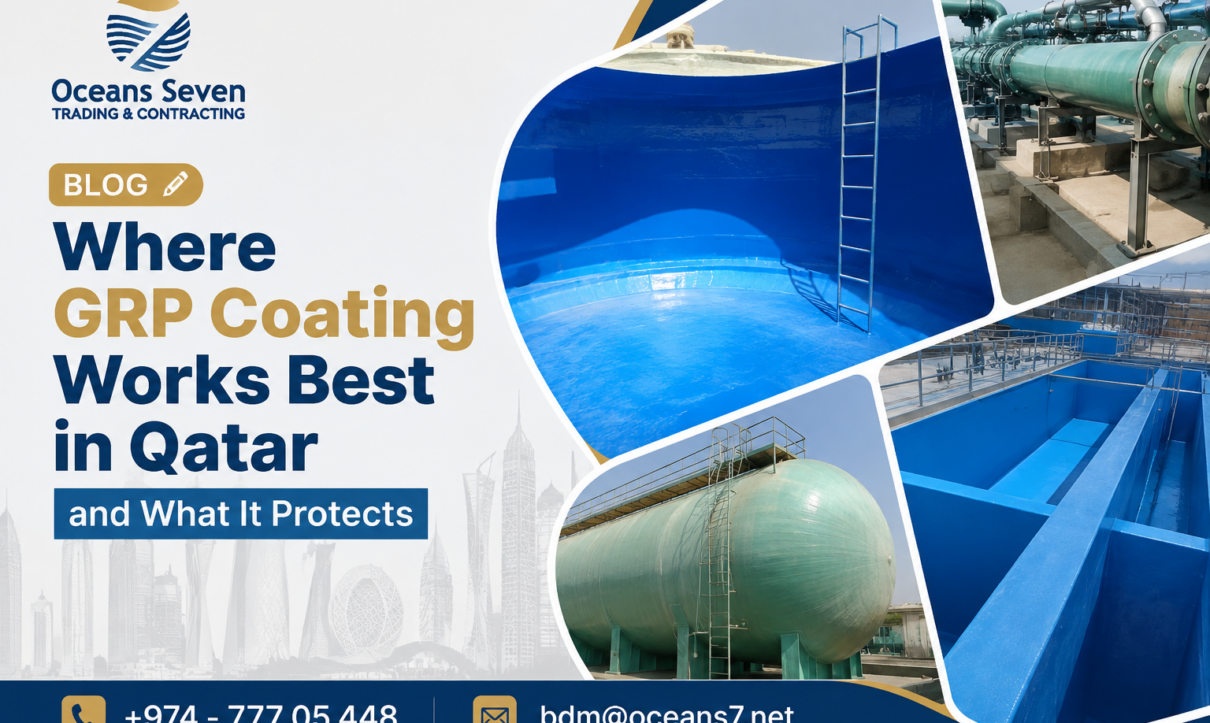
1. Water Tanks
Water tanks need a protective internal surface because they are constantly exposed to moisture. Concrete and steel tanks can develop deterioration over time, particularly when cracks, surface defects or corrosion are left untreated.
GRP coating can provide an additional protective layer inside suitable water tanks. It can also create a smoother surface that is easier to maintain.
2. Manholes and Underground Structures
Manholes, chambers and other underground structures are regularly exposed to moisture and wastewater. The surrounding environment can be particularly demanding when water and chemical substances remain in contact with the structure.
GRP coating can be used to protect suitable concrete or other substrates in these areas and reduce direct exposure of the underlying surface.
3. Pipelines and Drainage Systems
Pipelines and drainage structures can experience continuous contact with water and other substances. Over time, this exposure can affect the internal surface.
GRP lining can provide a protective layer inside selected pipelines, drainage systems and related structures. The right system depends on the material, dimensions and substances passing through the structure.
4. Swimming Pools and Water Features
Swimming pools and water features require reliable protection because their surfaces remain exposed to water for long periods.
GRP systems can be considered for suitable pool and water feature surfaces where a continuous protective layer is required. Proper preparation is essential, particularly when the existing surface has cracks, damage or previous coating layers.
5. Rooftops and Balconies
Rooftops and balconies are exposed to sunlight, rain and changing temperatures. Water can enter through damaged areas and eventually affect the underlying structure.
GRP coating can be used on suitable rooftop and balcony surfaces as part of a protective system. Before application, the condition of the existing surface needs to be assessed carefully.
6. Chemical Containment Areas
Some industrial areas need protection against contact with chemicals and other aggressive substances. In such locations, selecting a suitable coating system is important because not every coating material performs in the same way under chemical exposure.
GRP systems can be specified for certain chemical containment applications where the resin and reinforcement are compatible with the substances involved.
Why Surface Preparation Matters
The performance of a GRP coating is not determined by the coating material alone.
The surface underneath plays a major role.
Before application, the substrate should be inspected for cracks, loose material, contamination, moisture and other conditions that could affect adhesion. Damaged sections may need repair before the GRP system is installed.
Application conditions also matter. Resin selection, glass fibre reinforcement, layer configuration and curing all need to be considered according to the requirements of the project.
Is GRP Coating Suitable for Every Surface?
Not necessarily.
GRP coating is a specialised system, so the correct solution depends on the surface and the environment in which it will be used.
A water tank, rooftop, pipeline and chemical containment area do not have the same requirements. The expected exposure, temperature, movement, chemical contact and existing surface condition should all be considered before selecting the system.
For this reason, a site inspection is useful before deciding on the coating specification.
Choosing GRP Coating for a Qatar Project
For projects in Qatar, the coating system should be selected according to the actual conditions of the structure rather than simply choosing a coating based on its general description.
At Oceans7, GRP coating services are offered for applications including water tanks, manholes, pipelines, rooftops, basements, swimming pools and chemical containment areas. The company also provides GRP solutions for commercial, industrial and residential projects.
If a structure is showing signs of water penetration, corrosion or surface deterioration, assessing the cause first can help determine whether GRP coating is an appropriate solution.
GRP coating has applications beyond simple waterproofing. It can be used as a protective layer for structures exposed to water, moisture, corrosion and certain chemicals.
The most important part is choosing the right system for the specific application and preparing the surface correctly before installation.
For projects involving water tanks, underground structures, pipelines, rooftops, swimming pools or industrial areas, a professional assessment can help determine whether GRP coating is suitable for the site.